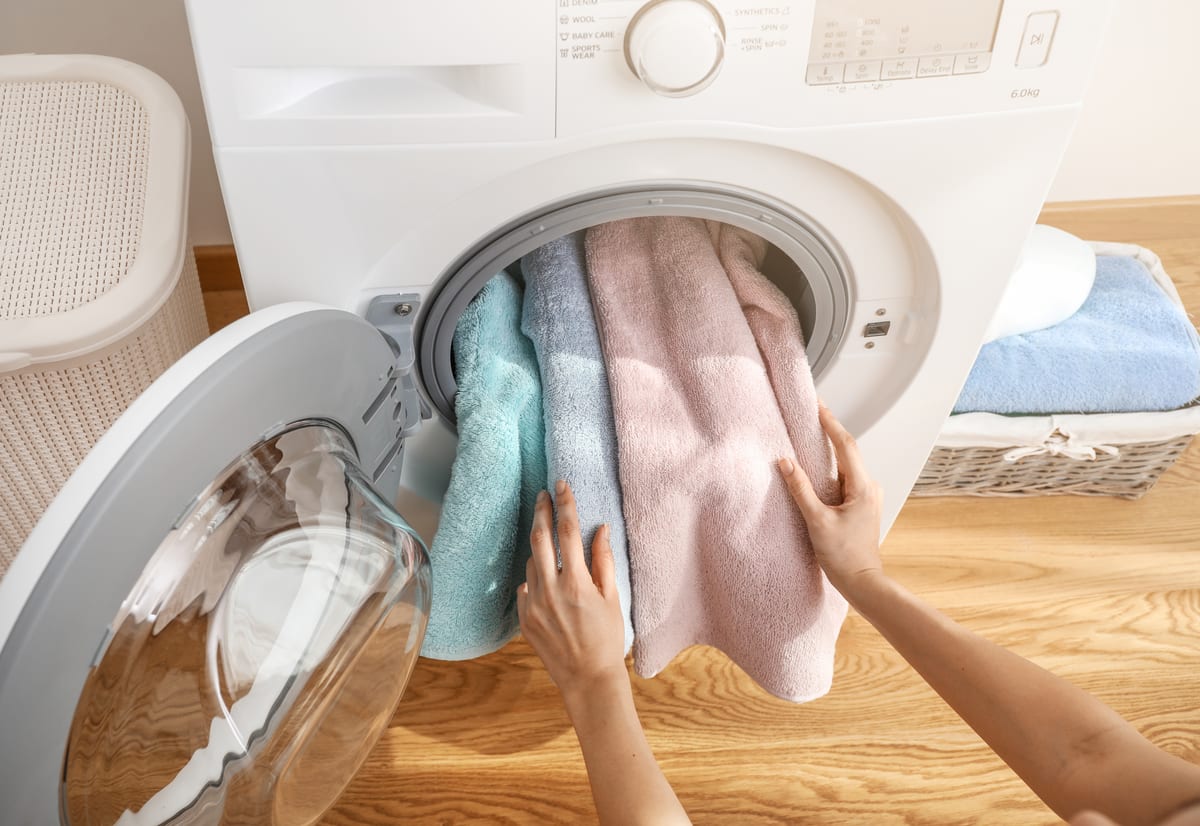
Towels are some of the most frequently used personal items. Because they come into direct contact with our skin, they need a little extra care.
So, how should we wash our towels?
It's a question many of us have asked. As we all know, taking care of towels isn't always as simple as it seems. If you want to use your towels for years, you need to wash them properly. Otherwise, they may become stiff, fade, lose their softness, or develop bad odors.
In this article, you'll learn how often to wash your towels, what temperature, and how to do it. We've also included some handy tips to help you.
How to Wash Towels (Step by Step)
- Sort your towels by color and fabric type. Wash towels by separating them according to similar colors and textures. White and colored towels, light hand towels, and heavy bath towels all need to be washed differently.
- Don't overload your washing machine. Towels need space to move freely for proper cleaning. So just fill it to about three-quarters of its capacity.
- Use the correct amount of detergent. Just use half the amount recommended on the label. You might be surprised at how little it is. A lot of people don't understand this advice until they've given it a try. Remember, more detergent doesn't mean cleaner towels. In fact, using too much can leave towels stiff and less absorbent.
- Generally, use warm water. Remember, excessively high heat make your towels more prone to wear and tear.
- Avoid using fabric softener. Fabric softener leaves a layer on the towel fibers that makes them less absorbent. It also traps odors over time.
- Remove and dry immediately. If you have a tumble drier, it's a good idea to dry your towels on a low heat setting. If you don't have a dryer, you should hang your washed towels to dry as soon as possible without leaving them in the washing machine.
Also, just a heads-up:
- Make sure you always wash your new towel before using it for the first time. This will remove any leftover residue from the production process, and increase absorbency.
What setting should you wash towels on?
Towels, an essential part of our daily lives, require different care depending on the type of fabric and weave. So, the ideal washing temperature, spin speed, and cycle are different for each type of towel.
Separating colors helps to keep the original appearance of towels and prevents color mixing. You can use color-protecting detergents on colored towels and oxygen-based detergents on white towels. Just use half the recommended amount. Don't use bleach as it breaks down natural fibers and fades colors.
It's important to wash your towels with warm water. Washing at 40°C cleans body oils, and detergent residue without damaging your towels. Hot water (60°C) is suitable for disinfection; e.g., after illness or gym use, or when towels have a bad smell that won't go away with hot washing. However, don't use this all the time.
When it comes to cotton towels, the cotton program is usually the better choice. If your towels have embroidery, tassels, or lace, you should choose the delicate program. In fact, hand washing is even better for some of these towels.
To make things easier, we've put everything you need to know in a handy table.
| Towel Type | Temperature | Spin | Cycle Program |
|---|---|---|---|
| 100% cotton | 40-60°C | 1000-1200 | Cotton |
| Colored/Patterned Towel | 40°C | 1000-1200 | Cotton |
| White Towel | 40-60°C | 1000-1200 | Cotton |
| Bamboo Towel | 30-40°C | 800-1000 | Delicate |
| Thin/Delicate Towel | 30-40°C | 800 | Delicate |
How to wash towels In a washing machine
When you're washing your towels, it's a small but important detail not to overload your washing machine. To get it really clean, fill your machine to about three-quarters of its capacity.
Depending on the fabric, wash your towels using the cotton or delicate program. If your machine has a towel program, you can also select it.
When choosing detergent, you should check whether your machine is a HE (high efficiency) model. Most front-loading machines and some top-loading machines have this option. As these machines use less water, it is important to use a low-foaming HE detergent. Liquid detergent is another option.
If your machine has an extra rinse option, use it as well. This cleans away any leftover detergent, keeps the fibers intact and makes the towels smell fresh.
Choose the right spin speed for your towel type. Excessively high spin speeds can cause your towels to wear out over time.
And don't forget to take your towels out of the machine after you've washed them. Make sure you dry them straight away.
Can You Wash Towels with Clothes?
Technically, you can wash them together, but it's usually better to wash them separately. I can almost hear you asking why. Here are the reasons:
- It's best to wash towels in warm water on a delicate or normal wash cycle. This temperature and cycle might not be suitable for all types of garments. When washed on the same setting, neither towels nor clothes may be cleaned properly.
- Cotton towels shed a lot of lint, especially when they're new. This makes it difficult to remove lint from dark-colored clothes.
- Garments with metal accessories like hooks, zippers, and Velcro can damage the towel fabric.
- Towels take longer to dry than regular laundry because they're heavier. This can mean that your towels may still be damp while the rest of your laundry is dry, which can lead to bad odors.
But of course, there may be exceptions. If there are no fasteners like zippers or hooks, you can usually wash bath towels with a similar structure and colored cotton items.
We do, however, recommend washing towels separately. This is a small but important tip that will extend the life of both your towels and other laundry.
How to Get the Mildew Smell Out of Towels
Bad odor in towels usually occurs when they have been left damp or in a damp place. If you notice this smell, you should take action straight away. But the most important thing is to prevent mold from forming in the first place. Here are a few tips:
- Wash your towels regularly.
- Don't leave towels damp; dry them immediately. Make sure the towels are completely dry before folding them.
- Use effective cleaning products; avoid fabric softeners that trap odors.
- Clean your washing machine regularly.
If, despite all these precautions, musty smells still form on your towels, you can try the following methods:
- Soak your towels in a mixture of water and one cup of white vinegar. Vinegar is a natural odor remover and it helps break down residues that make towels smell.
- Wash your towels with an effective detergent. Then, you can add half a cup of baking soda to the wash. Baking soda balances the pH value and makes your detergent more effective. It also helps keep the smell from coming back.
- If your towels still smell, use a special odor-removing detergent to get rid of it.
- Dry the towels in a dryer or in an airy place.
Just a heads-up: If you've got guest towels that have been sitting around for a while, it's a good idea to give them a wash before you use them, even if they look clean.
How to wash towels with vinegar
If you notice that your towels are rough, detergent may have built up in the fibers. Vinegar can help with that. As a natural acid, vinegar can break down limescale, detergent and fabric softener residues that get stuck in the towel fibers.
Application: Put your towels in the washing machine. Add one cup of white vinegar to the fabric softener compartment instead of fabric softener and run a normal cycle. The vinegar smell will fade as the towels dry.

Why do towels smell even after washing
There could be several reasons for this.
- Sometimes the smell comes from the towels not being washed properly. If you put too much in the washing machine, water and detergent can't circulate properly, so the towels won't get completely clean and there might be detergent residue left in the fibers. Washing with very cold water can also leave behind bacteria, body oils, and residue.
- If the towel has been washed repeatedly without completely removing the residue, unpleasant odors may be trapped in the fabric. Even if it smells clean at first, as soon as it gets damp, that bad smell will come back.
- The odor may be due to improper drying. If you leave your towels in the washing machine for too long before transferring them to the dryer or hanging them out to dry, they can develop mold and bacteria because of the moisture.
- The odor may be due to a problem with the washing machine itself. Regularly cleaning your machine and leaving it open to air out between washes can help reduce bad odors.
- It is also very important to use the right amount of detergent and avoid fabric softeners that can leave residue and cause odors.
Never mix vinegar and baking soda in the same cycle
Vinegar is acidic, while baking soda is basic. When you mix them, they neutralize each other, so they should never be used at the same time.
How to keep the smell from coming back
You've now learned how to get rid of musty smells in your towels. But the most important thing is to prevent this problem in the first place. Here are some simple tips to help you out:
- Hang your towels to dry after each use. Even if you don't use a towel very often, it's important to hang it somewhere well-ventilated.
- Never put wet towels or clothes in the laundry basket. Even if you leave them in a warm, dark place for just a few hours, they can still start to smell musty.
- Dry towels immediately after washing. If you leave your towels in the washing machine or leave them damp, musty smells can develop. You probably wouldn't want that, would you?
How to Make Towels Soft Again
Towels get stiff because of detergent residue and hard water. To help restore the softness of stiff towels:
- Wash with a cup of white vinegar and no detergent.
- Then, wash them in warm water using half a dose of detergent.
- Dry on medium heat using wool dryer balls. They help fluff up the fibers and make your towels feel softer.
Why towels get stiff
Towels can get stiff due to reasons such as hard water, too much detergent or fabric softener residue, washing or drying at very high temperatures, insufficient rinsing, ironing, and overuse. These factors disrupt the structure of cotton fibers, causing them to stick together.
How to keep towels soft and fluffy
The secret to soft and fluffy towels lies in using the right washing and drying routine. There are three key points to keep in mind when washing:
- First, don't use too much detergent because detergent residue stiffens the fibers of the towels.
- Never use fabric softener. It can coat the towel fibers. You can use vinegar or baking soda to soften the towel. Both can help with odors and residue.
- Dry thoroughly on low heat. You can also use a dryer ball to fluff the fibers during this process.
How Often Should You Wash Your Towels?
The frequency of towel washing varies depending on how and where you use them. As a general guide:
- Bath towels: After every 3-4 uses.
- Hand towels: Every 1-2 days.
- Washcloths: After each use.
- Beach towels: After each use
However, you should wash your towels after evere use if they are:
- used by a sick person,
- used after exercise,
- soiled with body fluids,
- used by someone with sensitive skin and eczema,
- kept in damp bathrooms that don't dry completely,
How often should you replace your towels?
Different towels experience varying levels of wear and tear depending on where and how they are used. Even with proper care, towels can lose their absorbency, softness, and structural integrity over time and start to smell. As a general guideline, frequently used hand and kitchen towels may need replacing after 1-2 years, while bath and beach towels may last 2-5 years.
FAQ
How do I get the stink out of towels fast?
Put one cup of white vinegar in the detergent compartment of your washing machine and wash it at 60°C.
Can I use fabric softener on towels?
No. Fabric softener reduces the absorbency of towel fibers and coats them with a layer that traps odors.
What temperature kills bacteria in towels?
Washing towels at 60°C can help reduce bacteria and provide a higher level of hygiene, but it is not necessary for every wash
Why do my towels smell musty even after washing?
This is normally because there's moisture trapped between the fibers probably due to poor drying.
Can you wash towels with clothes in cold water?
Yes, technically you can. However, we wouldn't recommend it because of the fabric structure and hygiene issues
Conclusion
We've shared some useful tips to keep your towels soft and make them last longer. Just to let you know, even if the towels are really well looked after, they do need to be replaced eventually. And when it's finally time for a new towel, choosing a high-quality cotton towel can make a noticeable difference.
And that's where capyhome comes in. We've got a great selection of towels made from high-quality Turkish cotton, perfect for you. We're confident you'll find something you'll love. Why not take a look and find your next favorite towel?